Disposing of a microwave isn’t as simple as tossing it in the trash. Even though it looks like a regular kitchen appliance, a microwave contains electronic parts and materials that need special handling. Throwing one out incorrectly can create safety issues and environmental harm.
Most microwaves get replaced because they stop working, feel outdated, or don’t fit during a kitchen remodel. In apartments and rental properties, microwaves are commonly left behind after move-outs, creating headaches for tenants and property managers who aren’t sure what to do next.
Can You Throw a Microwave in the Trash?
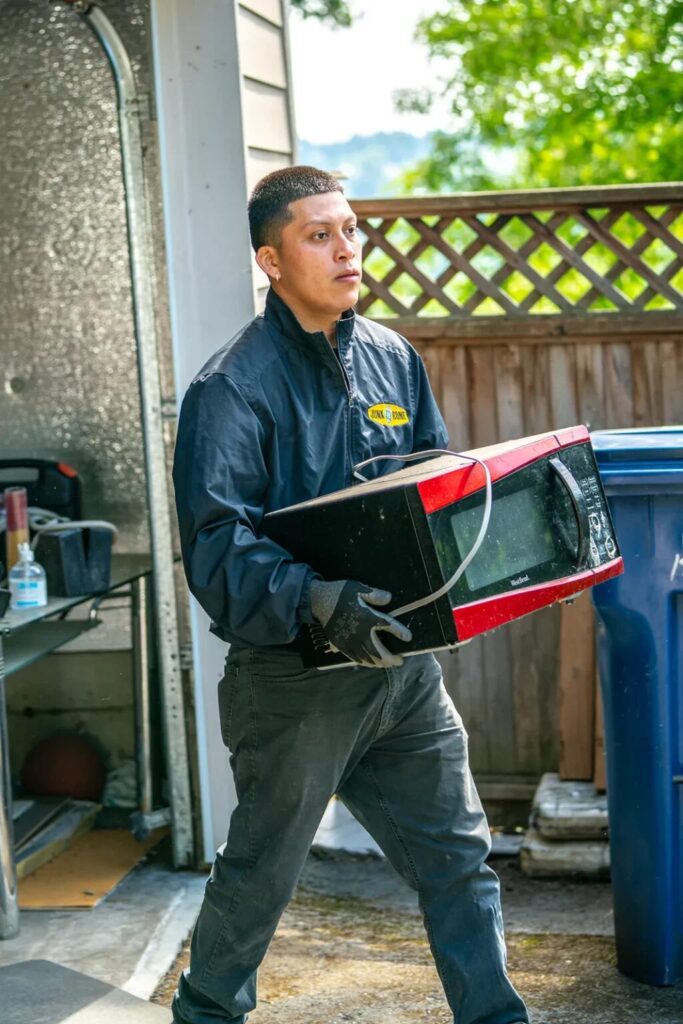
Short answer: usually, no. Most cities and waste services do not allow microwaves in regular household trash. Microwaves are classified as electronic waste (e-waste), which means they contain components that require special handling.
Inside a microwave are electrical parts, wiring, metals, and capacitors that can pose safety and environmental risks in a landfill. Many trash providers specifically prohibit microwave disposal in regular bins.
Throwing one in the trash can lead to:
- Safety risks for sanitation workers
- Environmental harm from improper disposal
- Fines or rejected pickups in some areas
Curbside Pickup vs. Private Disposal
- Curbside trash: Most city or residential trash services do not accept microwaves at the curb.
- Private disposal or junk removal: Licensed junk removal companies and approved facilities can legally take and process microwaves the right way.
In apartments and rentals, leaving a microwave next to dumpsters is typically not allowed and can be considered illegal dumping.
Is a Microwave Considered E-Waste?
Yes. A microwave is considered electronic waste because it uses electricity, contains circuit boards, has wiring and motors, and includes electrical controls. This classification directly affects how it should be disposed of.
Why Microwaves Fall Under E-Waste Rules
Inside a microwave are control boards, wiring, metal components, and capacitors that store electrical energy. These materials can’t be safely crushed or buried in landfills like regular trash. Many cities classify microwaves as e-waste to make sure these materials get removed, processed, or recycled properly.
Environmental Impact of Improper Disposal
When a microwave is thrown away incorrectly, metals, plastics, and electronic components don’t break down easily and can contribute to soil and water pollution. Responsible disposal recovers valuable recyclable materials and limits environmental harm.
Why Microwaves Require Special Disposal
Microwaves contain internal components that can be dangerous if handled or disposed of improperly.
Hazardous Components Inside a Microwave
- Capacitors: Store electrical energy and can hold a charge long after unplugging, creating a shock risk.
- Wiring and metals: Copper wiring and mixed metals need proper separation to prevent contamination.
- Circuit boards: Contain electronic materials that shouldn’t end up in landfills.
Fire and Injury Risks
When microwaves end up in regular trash or dumpsters, they can become a fire hazard. Compacted waste, damaged wiring, or stored electrical energy can cause sparks, fires, or injuries. Sanitation workers and facility staff are especially at risk.
Disposal Laws
Many cities have specific rules around microwave and e-waste disposal. Following proper methods isn’t just about compliance — it’s about safety and responsibility.
Can Microwaves Be Recycled?
Yes, but not through regular curbside recycling. Microwaves are made from several materials that recycling facilities can recover when handled properly:
- Steel and metal casings
- Copper wiring
- Aluminum components
- Certain plastics
- Internal metal frames
Why Curbside Recycling Won’t Accept Microwaves
Curbside programs are designed for simple, single-material items like cardboard and bottles. Microwaves are bulky, complex, and contain electronic parts that curbside systems aren’t equipped to handle. Placing one in a recycling bin can damage sorting equipment, create safety risks for workers, and cause the entire load to be rejected.
Why Certified E-Waste Recyclers Matter
Certified e-waste recyclers have the tools and training to safely break down microwaves and process each material correctly. They remove hazardous components, recover recyclable materials, and handle everything according to local disposal laws.
Don’t Call the 800 Number. Call Your Neighbors.
Locally owned since 1989. Not a franchise. Not a call center. Just us.
Where Can I Dispose of a Microwave?
| Option | Pros | Cons |
|---|---|---|
| E-waste recycling center | Proper handling, eco-friendly | You transport it, limited hours, possible fees |
| Retailer recycling programs | Convenient if you’re already shopping | Often restricted to items bought there, fees may apply |
| Scrap yards | May pay for metal value | Many won’t take them due to e-waste components |
| Junk removal service | No lifting, fast scheduling, handles everything | Costs more than DIY drop-off |
For many people — especially during apartment cleanouts or larger projects — junk removal is the fastest, easiest option.
Can I Donate or Reuse an Old Microwave?
Donating sounds great in theory, but options are more limited than most people expect.
When Donation Works
Donation is usually only possible if the microwave is:
- Fully functional
- Clean and in good condition
- A newer model with intact safety features
Some shelters, community housing programs, or reuse networks may accept working microwaves. Acceptance depends on current needs and local policies.
Why Most Donation Centers Decline Microwaves
Many large donation organizations no longer accept microwaves at all. Liability concerns, limited testing capabilities, and storage challenges make older or heavily used microwaves difficult to redistribute safely. When donation isn’t an option, recycling or professional removal is the better route.
Microwave Disposal for Apartments & Rentals
Microwaves are one of the most commonly abandoned appliances in rental properties. They show up after move-outs sitting in the unit or next to the dumpster, creating problems for property managers on tight turnaround schedules.
Tenant vs. Property Manager Responsibility
- If the microwave belongs to the tenant, it’s their responsibility to remove it when they move out.
- If the property supplied it, disposal falls on the property manager or owner when it’s no longer usable.
In practice, microwaves are frequently left behind, and property managers need a fast solution.
Best Practices for Apartment Cleanouts
- Remove abandoned appliances immediately after move-out
- Avoid placing them next to dumpsters (can be considered illegal dumping)
- Use professional junk removal for safe, compliant disposal
Handling microwaves properly during cleanouts keeps units move-in ready, prevents fines, and saves management teams time.
What’s the Easiest Way to Dispose of a Microwave?
DIY Disposal
You can handle it yourself, but it takes more effort than expected:
- Find an approved e-waste recycler
- Load and transport the microwave
- Pay drop-off or processing fees
- Work around limited hours or appointment requirements
Professional Junk Removal
A trained crew handles the lifting, hauling, and proper disposal. This option works best when:
- You don’t have time to research disposal rules
- Safety and proper handling matter
- The microwave is part of a larger cleanup
- You’re managing a rental or commercial property
At Junk B Gone, we start at just $99, our trucks are bigger than most junk haulers, and we don’t charge hidden surcharges. Through our partnership with Second Spark, a 501(c)(3) nonprofit, roughly 80% of what we collect gets recycled or donated.
Frequently Asked Questions
Can junk removal companies take microwaves?
Yes. Most professional junk removal companies handle microwaves. It’s often the easiest option, especially if the microwave is heavy, broken, or part of a larger cleanout. A good junk removal service will haul it away and make sure it goes to an appropriate recycling or disposal facility.
Are there fines for improper microwave disposal?
In some areas, yes. Disposing of a microwave in regular trash, leaving it next to a dumpster, or dumping it illegally can lead to fines or rejected waste pickup. Rules vary by city.
Can I leave a microwave for bulk pickup?
Depends on your local waste provider. Some bulk pickup programs accept microwaves, while others specifically exclude electronic appliances. Even when available, it usually requires advance scheduling and strict placement guidelines.
What should I do with a broken microwave?
Treat it as e-waste. Even non-working microwaves contain internal components that can be hazardous if mishandled. Recycle through an e-waste facility or use a junk removal service to make sure it’s handled safely.
Are microwaves hazardous waste?
Microwaves aren’t typically classified as household hazardous waste, but they do contain hazardous components — capacitors, wiring, and electronic parts that can pose risks if damaged or disposed of improperly. That’s why most disposal programs treat them as e-waste.
Need to Get Rid of a Microwave (or More)?
Free estimates, same-day service, and a crew that treats your home like their own.