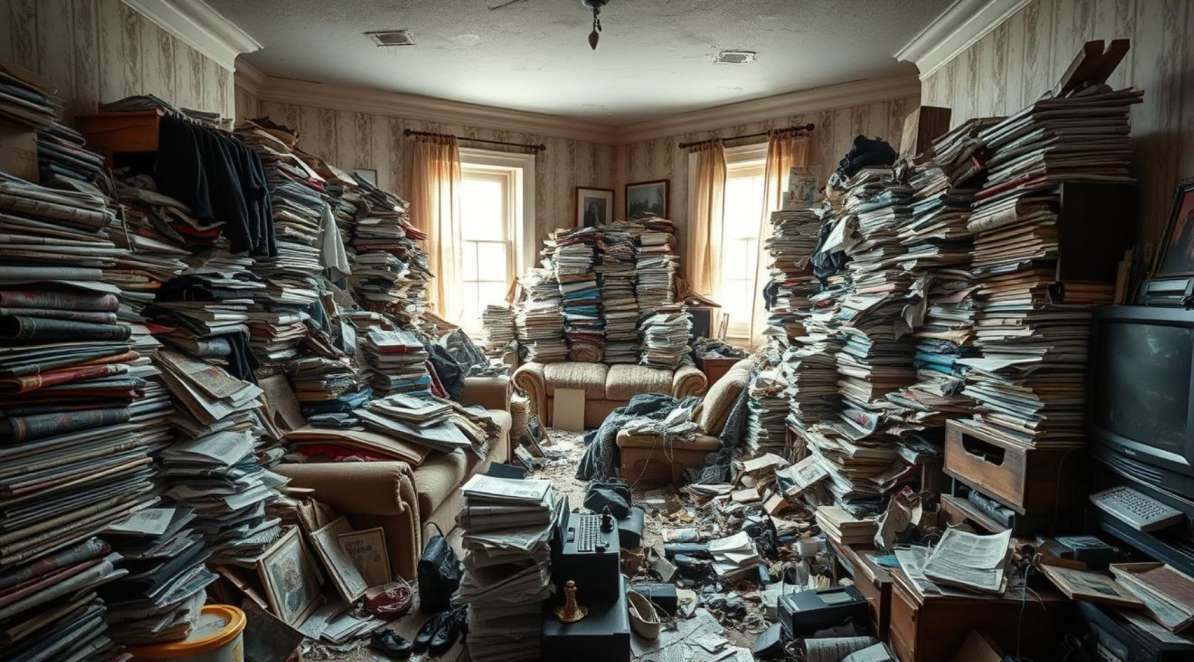
A hoarder house is a home so packed with belongings that basic living becomes difficult. Rooms fill up with stacks of newspapers, boxes, clothing, and household items until there’s barely room to walk. Paths through the house become narrow and winding, and it’s hard to tell what’s useful and what’s not.
Walking into a hoarder house can feel disorienting. Every surface is covered, every corner is full, and the sheer volume of stuff makes it hard to move safely. For the person living there, the situation often brings shame, anxiety, and a deep sense of being overwhelmed. Hoarding is a recognized mental health disorder, and the people affected deserve compassion rather than judgment.
What Causes Hoarding?
Hoarding disorder is marked by a persistent difficulty discarding possessions, regardless of their actual value. People who hoard often experience intense distress at the thought of getting rid of items. Over time, this leads to excessive accumulation that fills living spaces and makes them unusable for their intended purpose.
Common traits of hoarding behavior include:
- Difficulty parting with possessions, even items with little practical value
- Acquiring far more items than the home can hold
- Anxiety or distress when faced with discarding or organizing
- Daily life becomes harder as clutter takes over living spaces
| Characteristic | What It Looks Like |
|---|---|
| Difficulty Discarding | An inability to part with possessions, even broken or duplicate items |
| Excessive Acquisition | Buying, collecting, or saving far more than the home can accommodate |
| Impaired Functioning | Rooms can no longer be used for their intended purpose (kitchen, bedroom, bathroom) |
What Does a Hoarder House Actually Look Like?
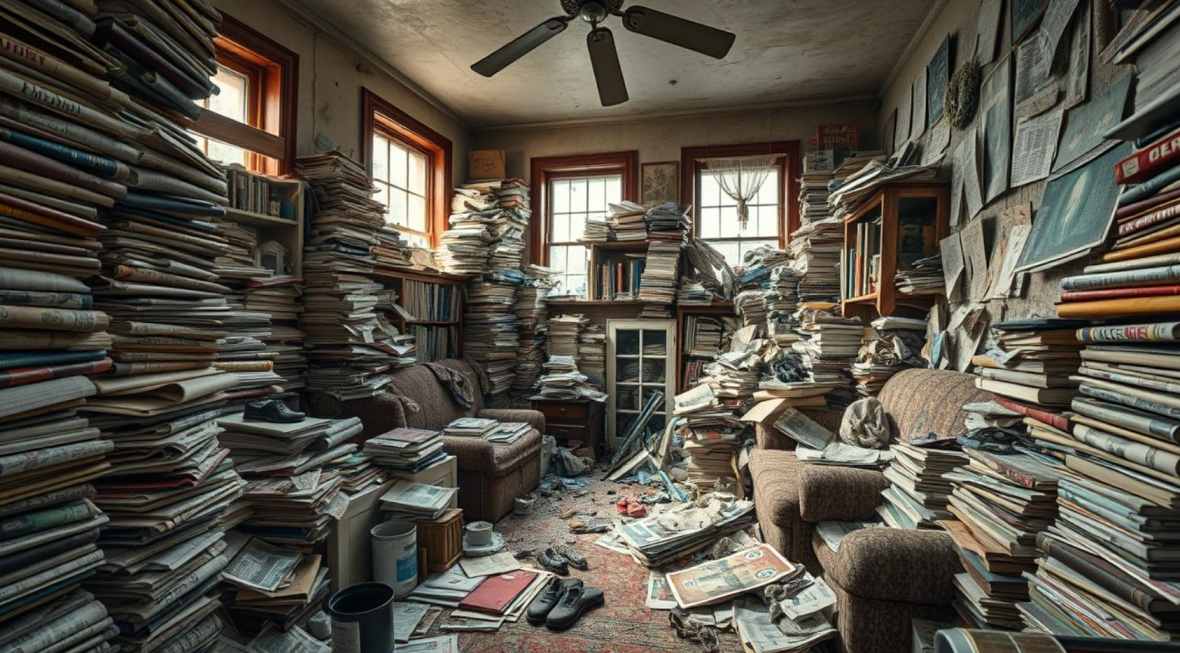
Every hoarder house is different, but the common thread is volume. Floors disappear under stacks of books, magazines, and newspapers. Counters and tables overflow with miscellaneous objects. Closets and cabinets are packed to the point where doors won’t close. Furniture becomes invisible under layers of belongings.
The clutter isn’t random. It often reflects patterns of what the person struggles to release: sentimental items like photographs and letters, collections of newspapers or magazines, clothing (sometimes with tags still on), and household items kept “just in case.”
Safety Hazards in a Hoarder House
Hoarder houses carry real physical dangers beyond the emotional toll. The clutter creates hazards that affect everyone who enters the home:
- Fire hazards: Flammable materials stacked near heat sources, blocked exits, and overloaded electrical outlets
- Tripping and falling: Loose objects on floors, narrow walkways, and unstable piles that can topple
- Health risks: Poor air quality from dust and mold, pest infestations, and exposure to spoiled food or biohazards
These hazards make cleanup difficult for emergency responders and cleanup crews alike. Anyone entering a hoarder house needs to assess the space carefully and take precautions before starting any work.
Hoarding by the Numbers
An estimated 2-5% of the population deals with hoarding disorder. That means millions of homes across the country are affected. The most commonly hoarded items include:
- Newspapers, magazines, and mail
- Clothing and linens
- Collectibles, trinkets, and memorabilia
- Photographs, letters, and sentimental objects
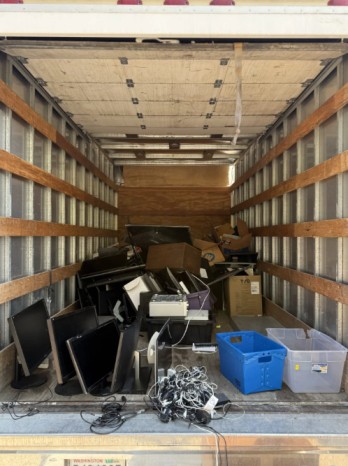
- Household appliances and electronics
- Receipts, bills, and paperwork
The accumulation happens gradually. Most people don’t wake up one day in a hoarded home. It builds over months and years, and by the time it becomes unmanageable, the task of cleaning up feels impossible.
Professional Hoarder House Cleanup
Cleaning out a hoarder house is not the same as a regular cleanout. It requires patience, sensitivity, and a systematic approach. Professional cleanup crews understand the emotional weight of the situation and work with the homeowner (or their family) to make the process as respectful as possible.
A professional hoarder house cleanup typically involves:
- A full assessment of the property to identify hazards and plan the work
- Careful sorting of items, separating what the homeowner wants to keep from what can be donated, recycled, or disposed of
- Deep cleaning and sanitizing once the space is cleared
- Safe disposal of hazardous materials
- Coordination with mental health professionals when appropriate
| Service | What’s Included | Why It Matters |
|---|---|---|
| Full Hoarder House Cleanup | Assessment, sorting, hauling, and disposal of accumulated items | Creates a safe, livable space and reduces emotional stress |
| Specialized Cleanup Crew | Experienced teams trained to handle the unique challenges of hoarding | Compassionate approach that respects the homeowner’s feelings |
| Sorting and Organization | Systematic categorization of items: keep, donate, recycle, dispose | Helps prevent future accumulation and promotes healthier habits |
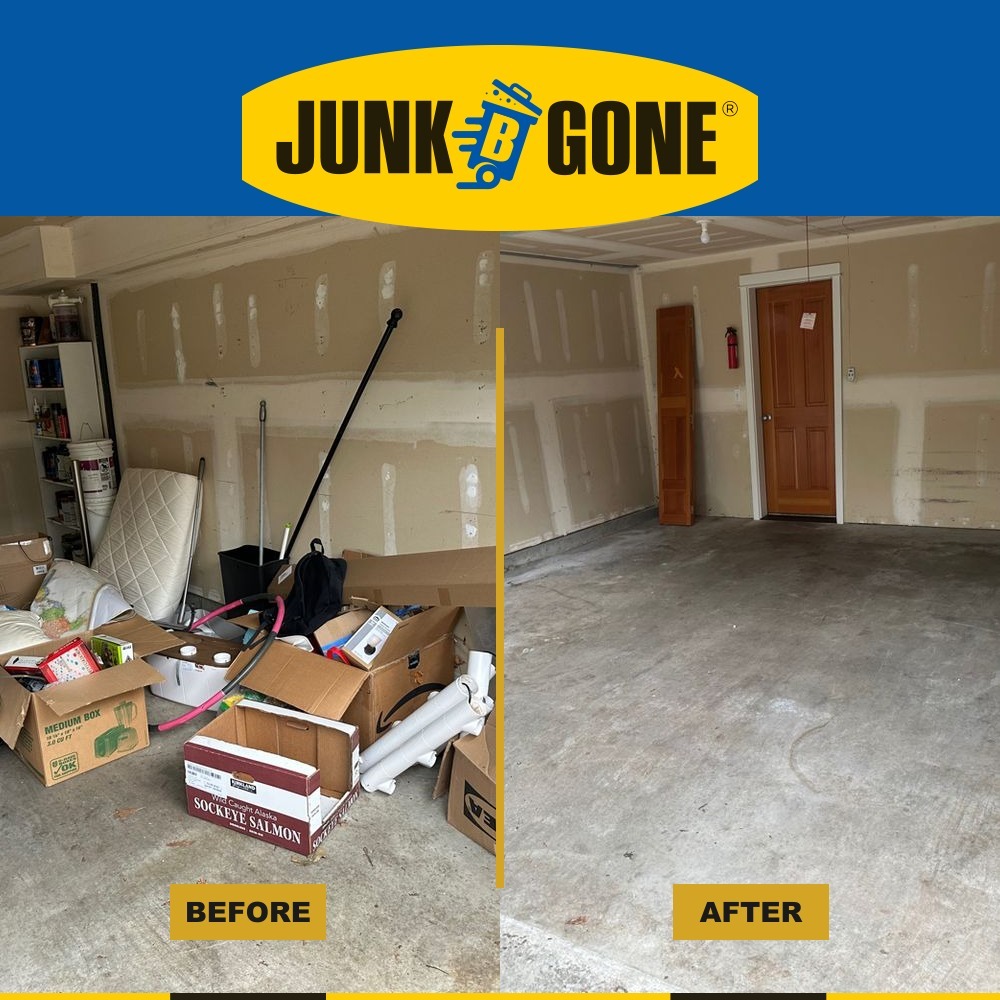
At Junk B Gone, we’ve handled hoarder house cleanouts across the Seattle area for over 35 years. We bring bigger trucks (ours hold roughly twice what most competitors’ trucks carry), and through our nonprofit Second Spark, about 80% of what we haul gets recycled or donated rather than sent to a landfill.
Don’t Call the 800 Number. Call Your Neighbors.
Locally owned since 1989. Not a franchise. Not a call center. Just us.
Frequently Asked Questions
What does a hoarder house look like?
A hoarder house is filled with accumulated belongings covering floors, furniture, and countertops. Rooms become unusable, walkways shrink to narrow paths, and the volume of items ranges from stacks of newspapers and magazines to electronics, clothing, and household goods piled from floor to ceiling.
What are the safety hazards in a hoarder home?
The main hazards are fire risk (flammable materials near heat sources, blocked exits), tripping and falling (loose objects, unstable piles), and health concerns (mold, pests, poor air quality, potential biohazards). Emergency responders often struggle to access these homes in an emergency.
How much does a hoarder house cleanup cost?
Cost depends on the size of the home, the volume of items, and the severity of the situation. At Junk B Gone, our pricing starts at $99 and we always provide free estimates before starting any work. A full hoarder house cleanup in the Seattle area typically requires multiple truck loads, and we’ll give you a clear price upfront.
How long does it take to clean out a hoarder house?
Most hoarder house cleanouts take one to three days depending on the home’s size and the amount of accumulation. Our crew works efficiently with the right equipment, and we coordinate the timeline with you so there are no surprises.
Can you clean out a hoarder house without the homeowner present?
Yes. Many of our hoarder house cleanouts are coordinated with family members, property managers, or estate representatives. We can work from a plan you provide, setting aside specific categories of items for review while clearing the rest. We handle these jobs with discretion and respect for everyone involved.
Ready to Reclaim the Space?
Free estimates, same-day service, and a crew that treats your home like their own.