
Blog
How to get rid of a Junk RV or Old Camper
December 16, 2023
How to Get Rid of a Junk RV
That RV in your driveway used to mean freedom — weekend trips to the coast, summer road trips with the family. Now it’s a rusting money pit with flat tires and a leaky roof, and you’re paying to store something you haven’t driven in years.
Getting rid of a junk RV is more complicated than dropping off an old couch. RVs are big, heavy, often contain hazardous materials, and come with legal paperwork. This guide covers your five best options for RV removal, what it costs, and what the law requires.
5 Options for Junk RV Removal
1. Hire a Professional Junk Removal Company
The fastest and easiest option. A junk removal company handles the towing, hauling, and disposal so you don’t have to figure out the logistics yourself.
At Junk B Gone, we’ve been hauling junk RVs and old campers across the Greater Seattle area for 37 years. We handle the heavy lifting, towing, and responsible disposal. If you’re in Seattle or the surrounding area, give us a call — we can usually get it done same-day.
2. Salvage and Scrap Services
If your RV is truly at the end of the road, a salvage yard will dismantle it and recover usable parts — engines, axles, appliances, aluminum siding. You might get a small payout depending on the scrap metal value, or at least get free removal.
3. RV Dealership Trade-In
Some dealerships accept old RVs as trade-ins toward a newer model. Even if the trade-in value is low, it saves you the cost and hassle of separate disposal. Worth asking if you’re already shopping for a replacement.
4. Donate It
Several charities accept RV donations — some use them to house people in need, others sell them to fund their programs. You get a tax deduction, and the RV serves a purpose instead of rotting in your yard. Check with local nonprofits or national organizations that accept vehicle donations.
5. Sell It Online
Craigslist, Facebook Marketplace, and OfferUp connect you with buyers looking for project RVs, parts rigs, or quirky housing. Be upfront about the condition — people looking for fixer-uppers appreciate honesty and detailed photos.
Got a junk RV taking up space? We handle RV removal and old camper hauling — same-day, all-inclusive pricing. Call (206) 722-4285 for a free estimate.
What Does Junk RV Removal Cost?
RV removal pricing depends on three main factors:
| Factor | Impact on Cost |
|---|---|
| Size | Bigger RV = more equipment and labor to haul it |
| Condition | A rolling RV is cheaper to move than one with no tires or a seized engine |
| Location | Easy driveway access vs. stuck in a backyard behind a fence |
Get a few quotes before committing. At Junk B Gone, our minimum is $99 and all quotes include labor, towing, and disposal — no hidden fees.
Photos from Recent RV Removals
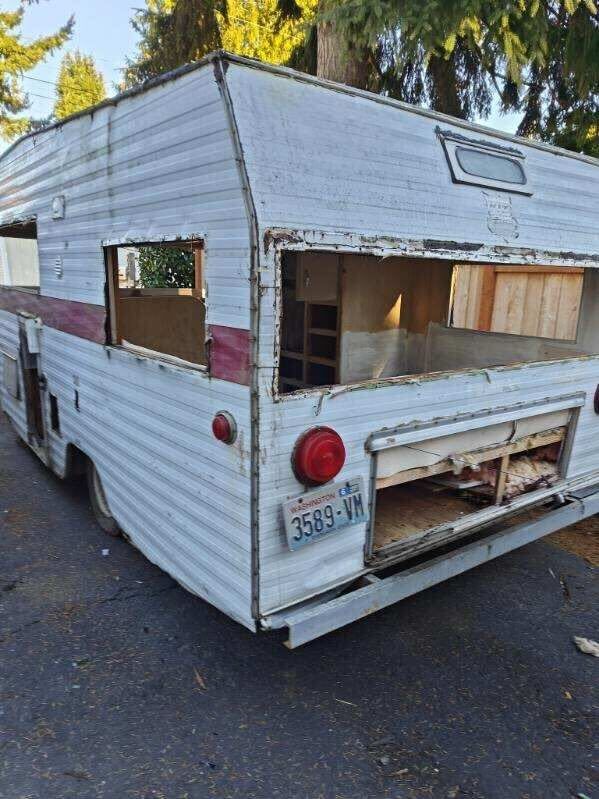
An old camper we hauled away in the Tacoma area.
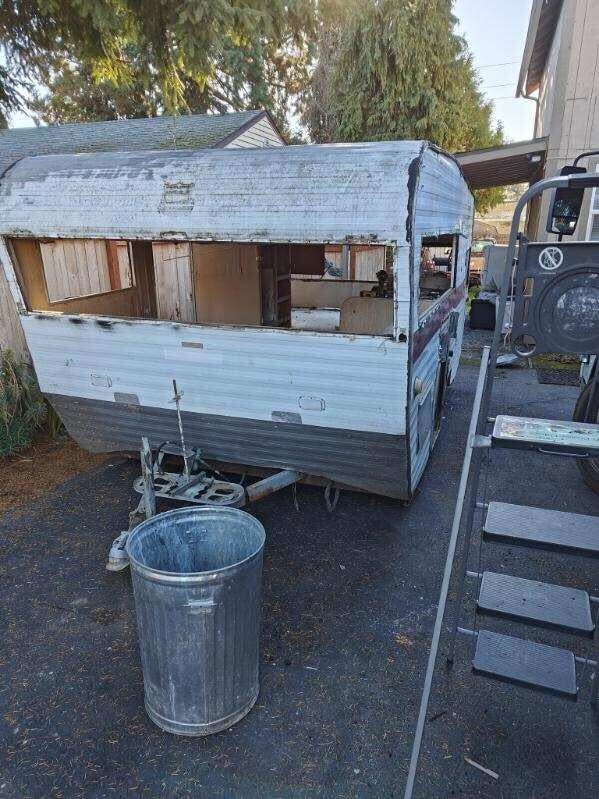
Towing a junk RV out of a Seattle neighborhood.
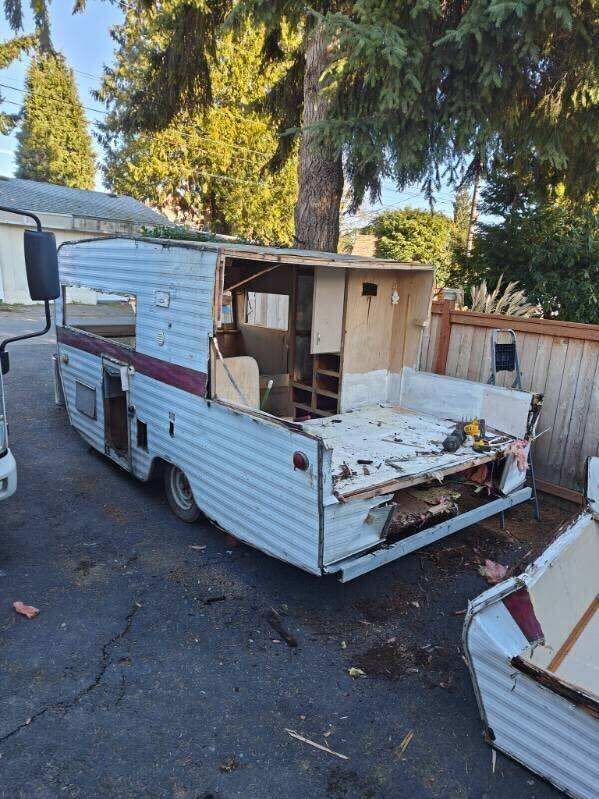
Another RV removal in Puyallup — this one hadn’t moved in over two years.
Legal Requirements for RV Disposal in Washington State
You can’t just dump an RV or abandon it on the street. Washington State has specific rules:
- Title transfer: If you’re selling, donating, or sending the RV to salvage, you need to transfer the title. This releases you from liability for anything that happens with the vehicle after it leaves your property.
- Local regulations: Some cities require you to dismantle the RV before it qualifies as waste. Others have designated drop-off locations for large vehicles.
- Licensed disposal: Make sure whoever hauls your RV follows proper disposal practices. Unlicensed operators may illegally dump it — and that liability can come back to you as the last registered owner.
Don’t Call the 800 Number. Call Your Neighbors.
Locally owned since 1989. Not a franchise. Not a call center. Just us.
Environmental and Safety Concerns
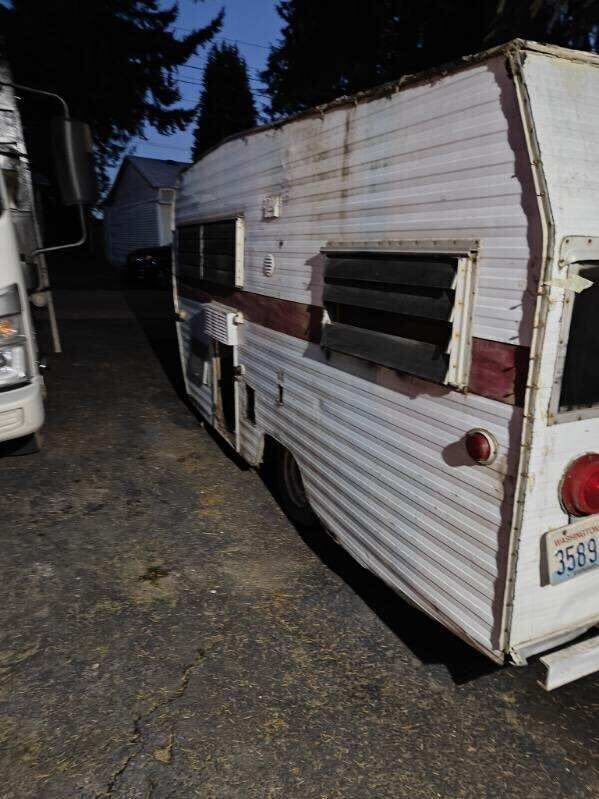
A junk RV sitting on a property in Washington — the longer they sit, the more hazardous they become.
Old RVs aren’t just ugly — they’re hazardous. Here’s what can go wrong when a junk RV sits too long:
- Fluid leaks: Gasoline, motor oil, coolant, and transmission fluid seep into soil and groundwater.
- Hazardous materials: Older RVs may contain lead paint, mercury switches, and asbestos insulation.
- Pest infestations: Rodents, wasps, and other pests love abandoned vehicles.
- Structural collapse: A rotting RV with a compromised frame is a safety hazard for anyone nearby, especially kids.
The longer you wait, the worse it gets — and the more expensive removal becomes. If your RV has been sitting for more than a year, get it handled sooner rather than later.
5 Tips for Picking the Right RV Removal Service
- Verify they’re licensed and insured. This protects you if something goes wrong during towing or hauling.
- Read their reviews. Look for companies with a track record handling large vehicle removal — not just furniture and appliance jobs.
- Ask about recycling. A responsible company will recycle metals, drain fluids properly, and dispose of hazardous materials according to regulations.
- Get multiple quotes. Prices vary. The cheapest option isn’t always the best, but you shouldn’t overpay either.
- Ask about extras. Some companies help with title paperwork or clean up the area after the RV is gone. Those details matter.
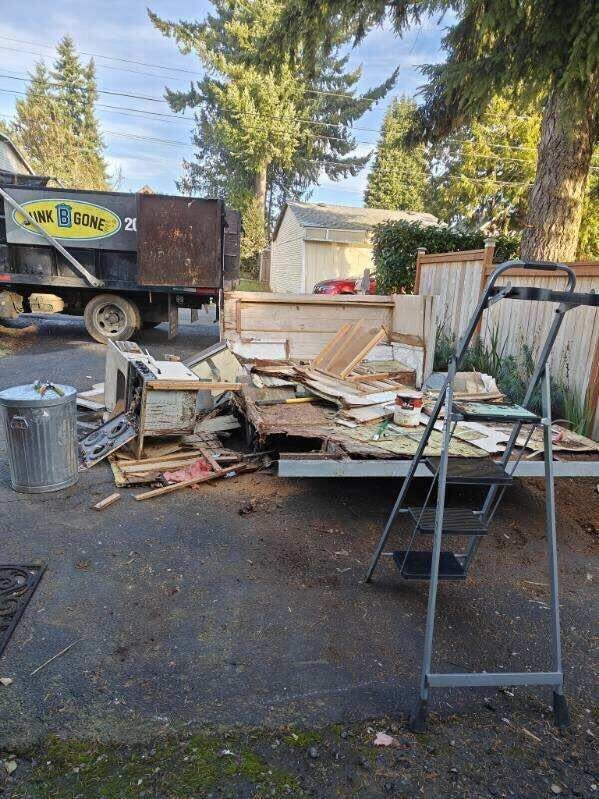
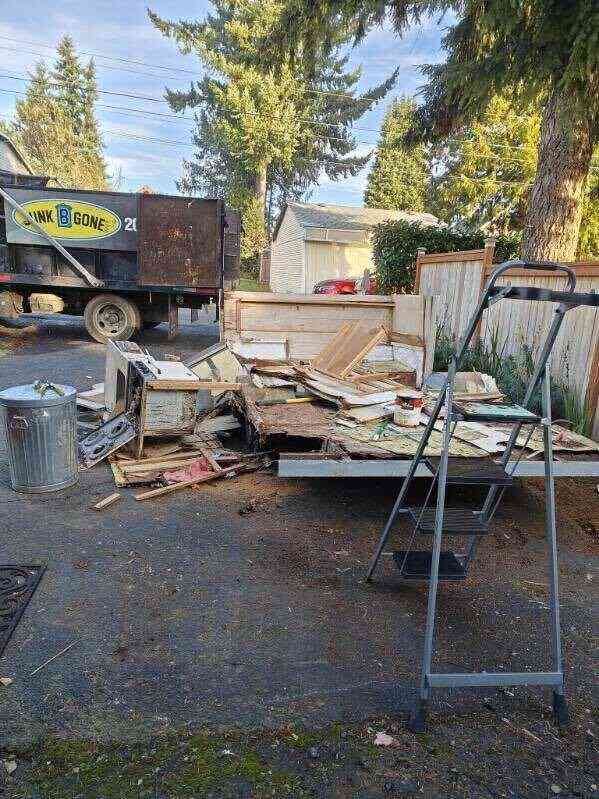
Another successful RV removal by the Junk B Gone crew.
Frequently Asked Questions
Can you remove an RV that doesn’t run?
Yes. We haul non-running RVs, campers, and trailers regularly. We bring the right equipment to tow it out regardless of condition.
How fast can you remove my junk RV?
In most cases, same-day or next-day. Call us in the morning at (206) 722-4285 and we can often have it gone by the afternoon.
Do I need the title to have my RV removed?
Having the title makes the process smoother, but we can work with you even if the title is missing. Contact us and we’ll walk you through the options.
What areas do you serve for RV removal?
We serve the entire Greater Seattle area including Bellevue, Tacoma, Puyallup, Kirkland, Redmond, Shoreline, and everywhere in between.
That Junk RV Isn’t Going Anywhere on Its Own
Free estimates, same-day service, and a crew that treats your home like their own.
We Provide Junk removal & Disposal Services.
Free onsite estimates with all-inclusive pricing. No hidden fees.
Our friendly, professional teams do all the heavy lifting.
Responsible disposal.
Give us a call, we're ready to haul.
Related Posts
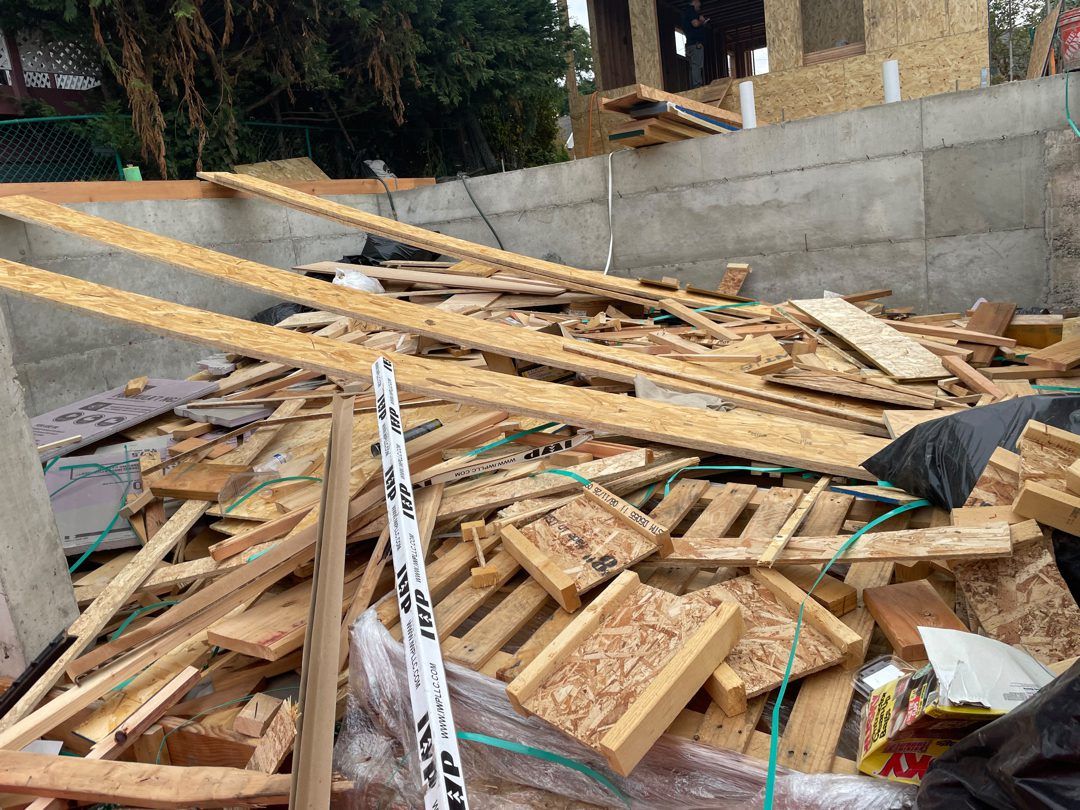

Construction Debris Removal in Seattle — A Backyard Buried in Scrap Lu...
A Seattle homeowner called us with a backyard that looked more like a demolition site than a yard. Framing offshoots, …
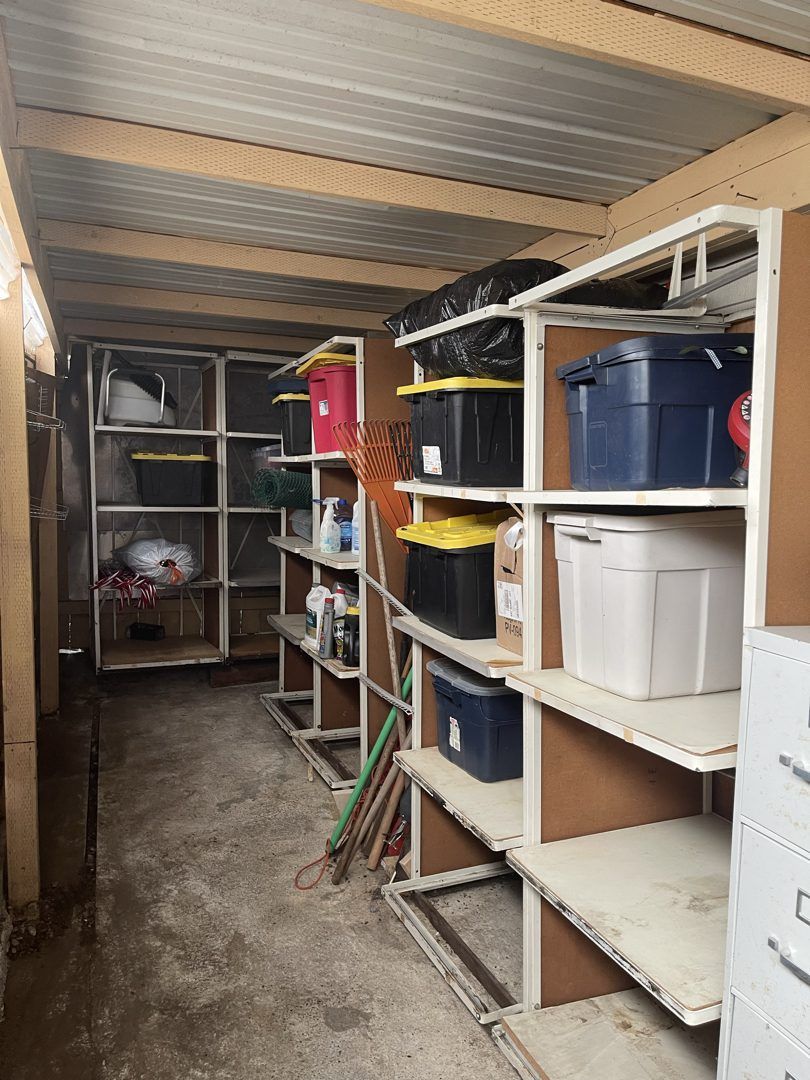
Garage & Storage Cleanout in Renton — From Packed to Parked | Junk B Gone
A Renton homeowner called us with a garage that hadn't seen a clear floor in years. Storage bins stacked to …
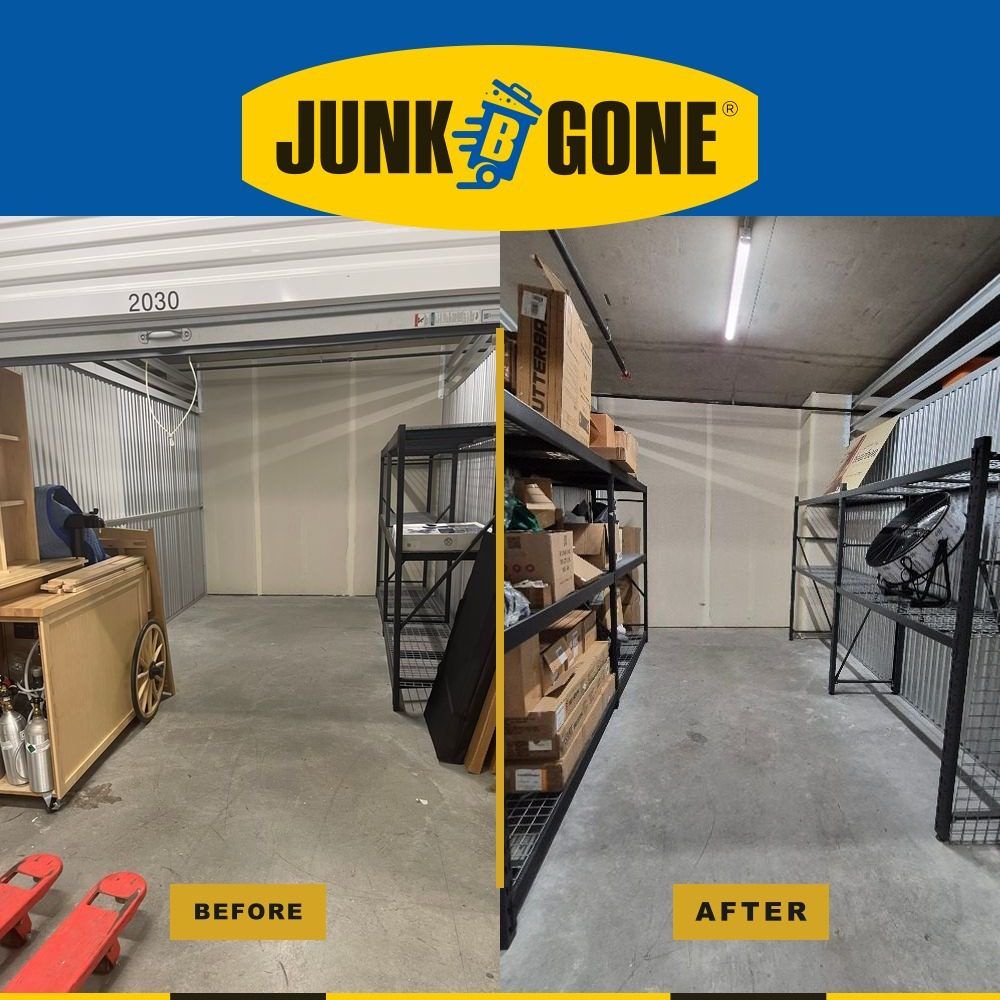
Storage Unit Cleanout in Seattle — Unit 2030 Cleared and Reorganized |...
Storage unit 2030 had a woodworking cart, gas cylinders, pallet jacks, and a leaning stack of shelving crammed against the …
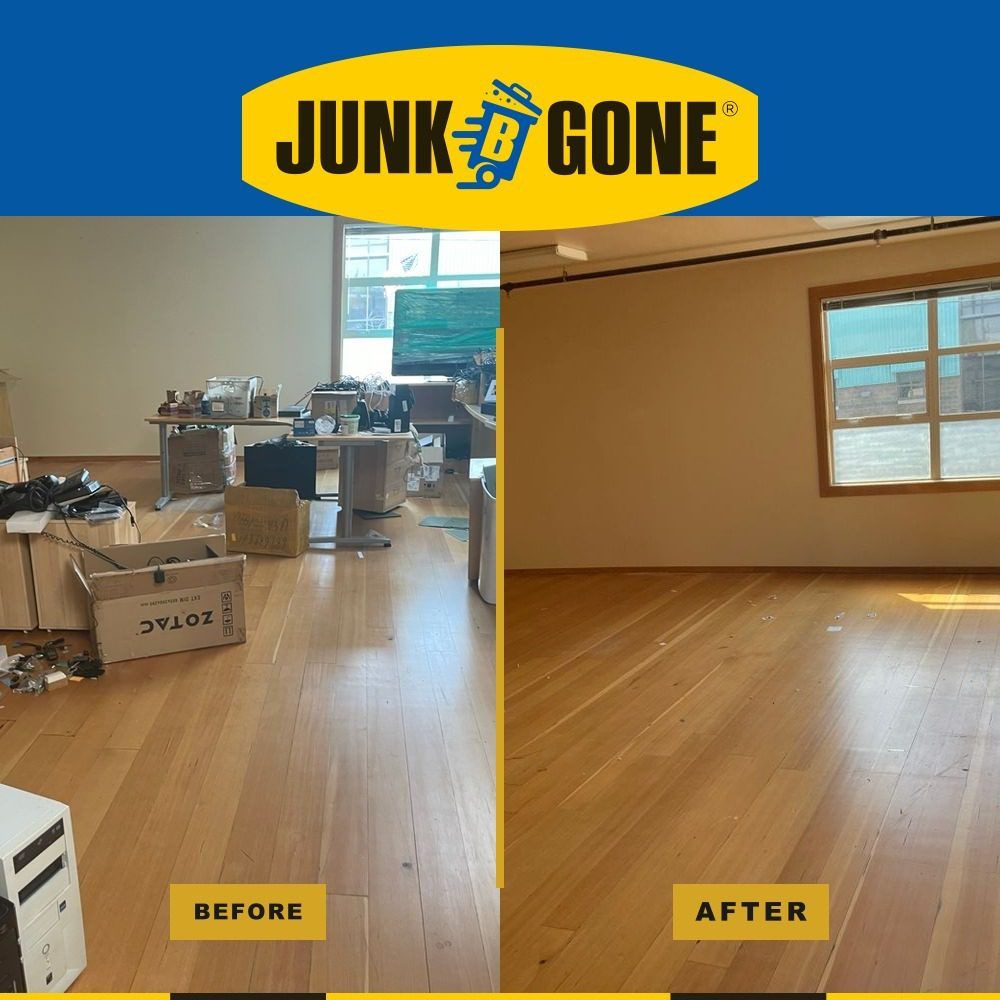
Office Cleanout in Everett — From Desk Clutter to Empty Hardwood Floor...
An Everett office had one goal: clear everything out and leave the hardwood floors ready for the next tenant. Old …
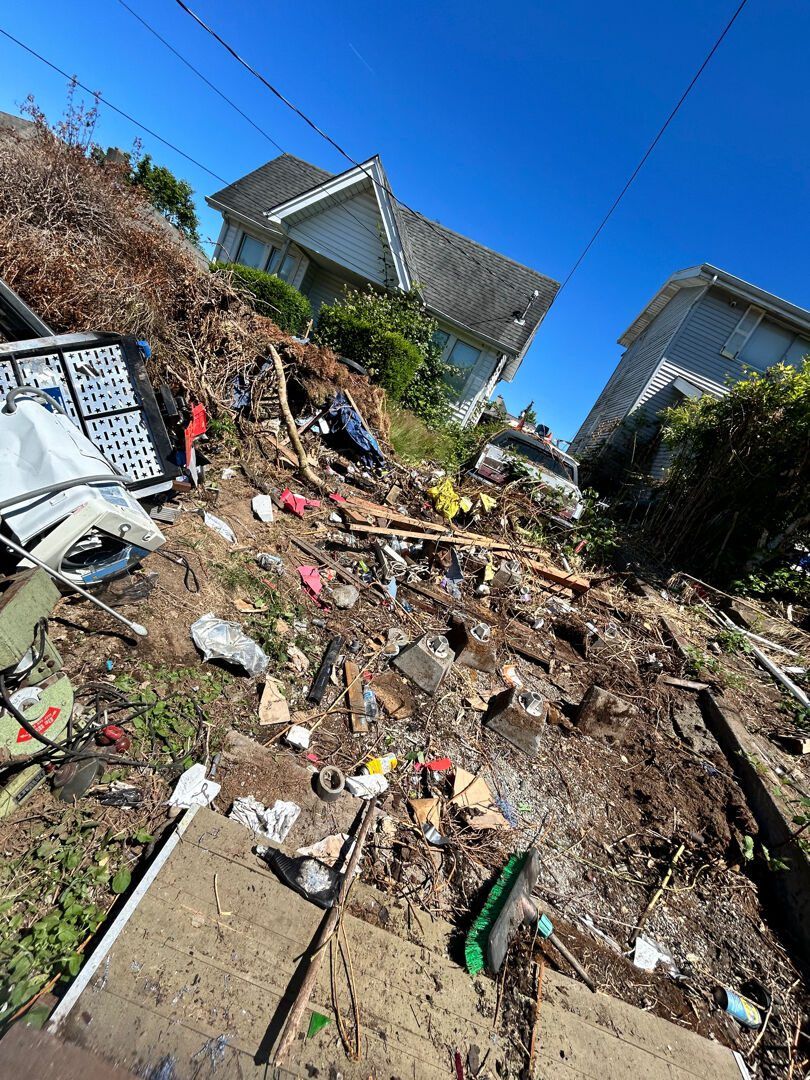
Seattle Property Cleanout: Reclaiming a Buried Yard
Some properties don't get cluttered overnight. They fill up slowly, season after season, until the yard, the driveway, and the …
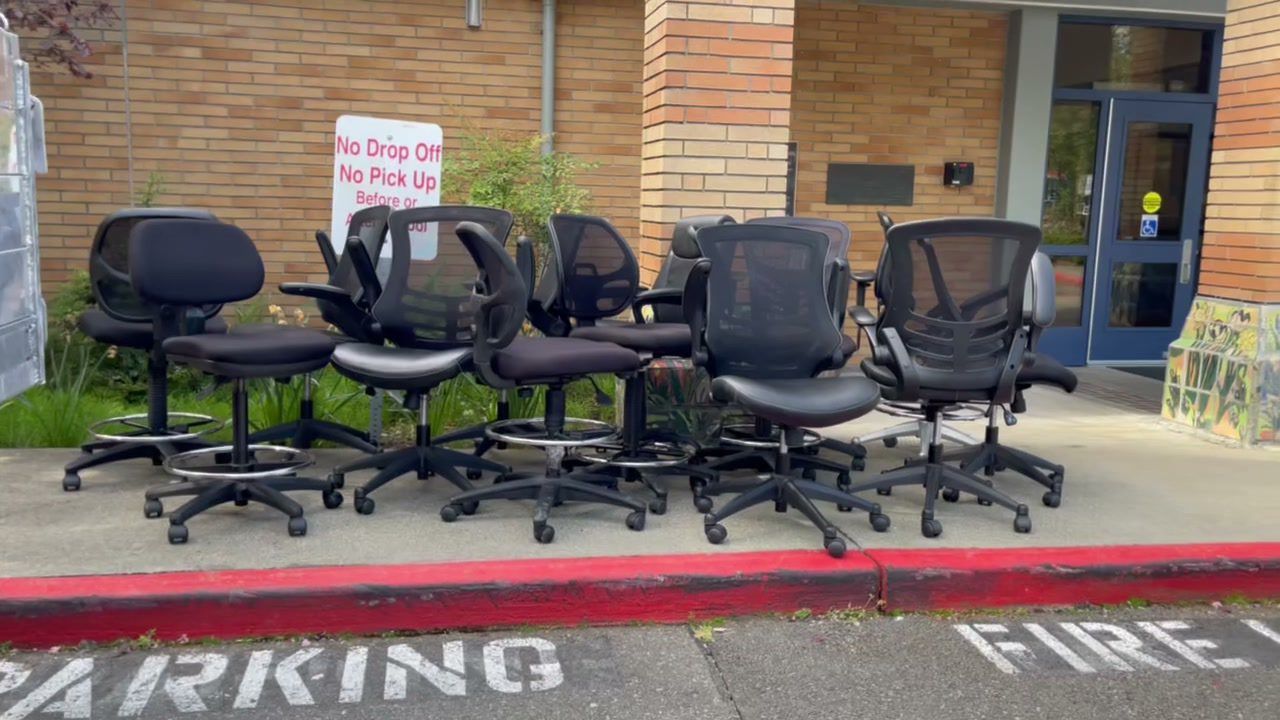
We Rescued 60+ Office Chairs from the Landfill — and Donated Them to M...
Last week we cleared out a downtown Seattle office. The customer was moving locations and wanted everything gone — desks, …
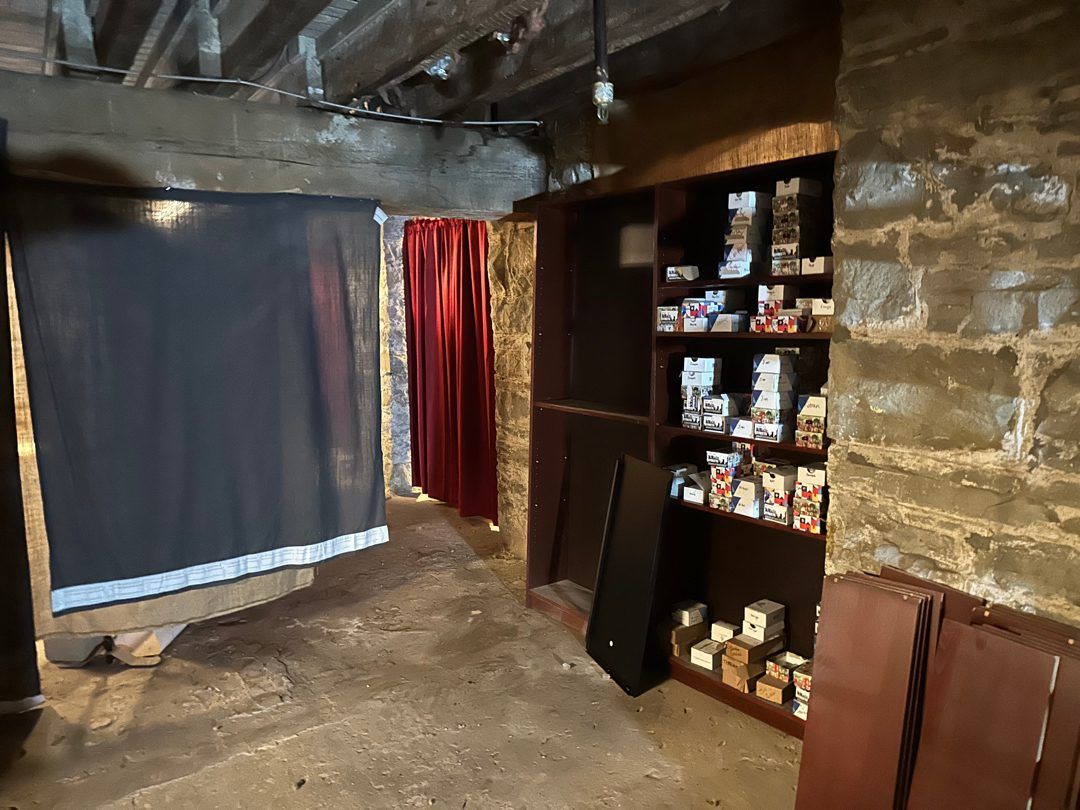
Why Pioneer Square's Beneath the Streets Trusts Junk B Gone
When a fellow Seattle small business trusts you enough to call back three or four times, that says more than …
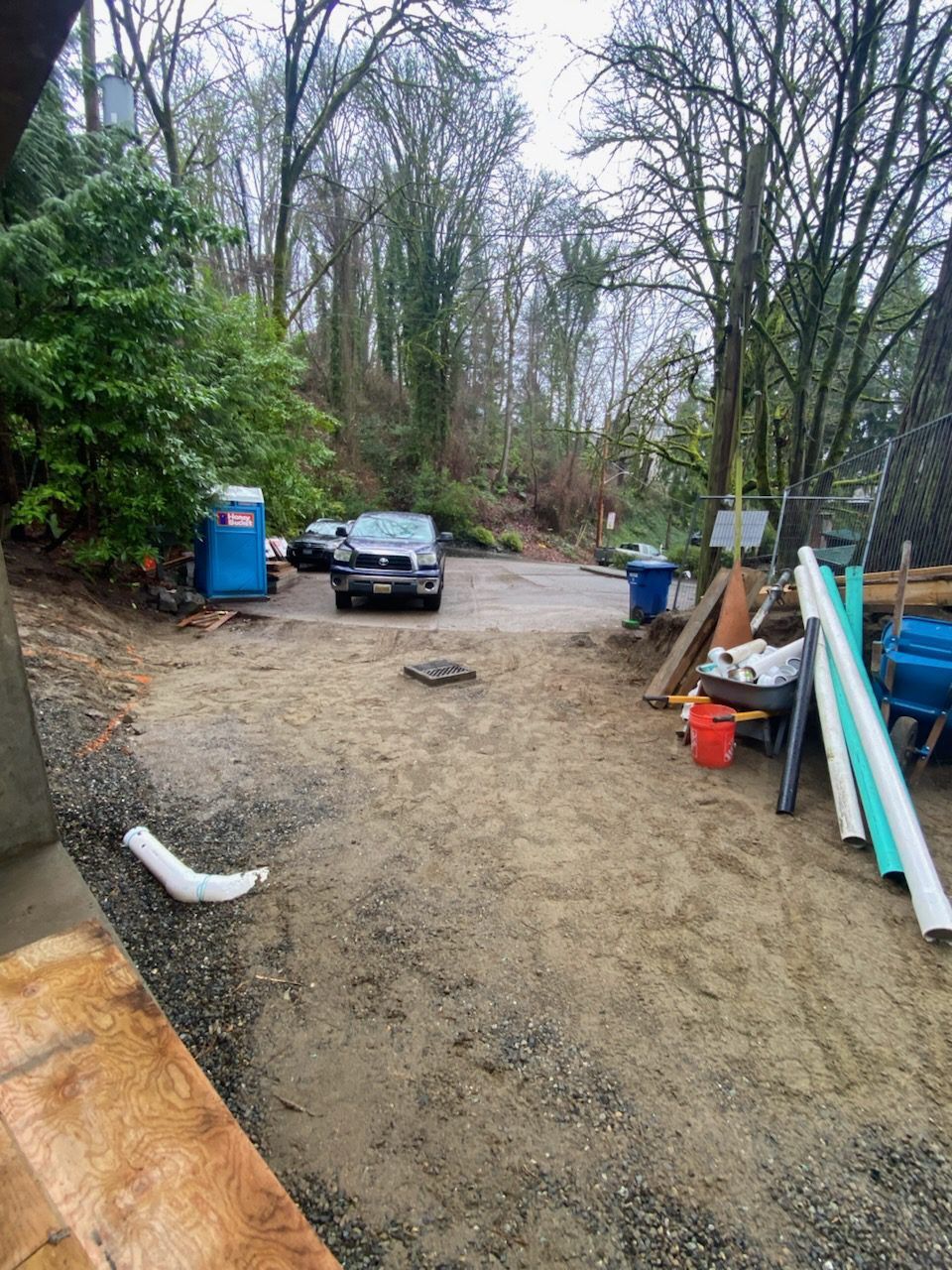
Construction Debris Removal in Seattle: One Visit, Completely Cleared
A Seattle contractor needed a job site cleared fast — lumber, pipes, old materials, and mixed debris had piled up …
Apartment Remodel Cleanout: From Chaos to Clean in Under Two Hours
The finished result — completely cleared in under two hours When you’re managing an apartment remodel, the last thing you need …
How to Dispose of Paint in Seattle (The Right Way)
Our crew picking up dozens of paint cans for responsible recycling. If you’ve ever stared at a pile of old paint …
How Much Does Junk Removal Cost in Seattle? (2026 Guide)
Your garage hasn’t fit a car since 2021. The spare bedroom? Storage unit. And your partner’s been giving you that …

What to Get Rid of When Moving Across Country
Moving across the country is the perfect reset button. When everything you own has to be packed, loaded, and hauled …