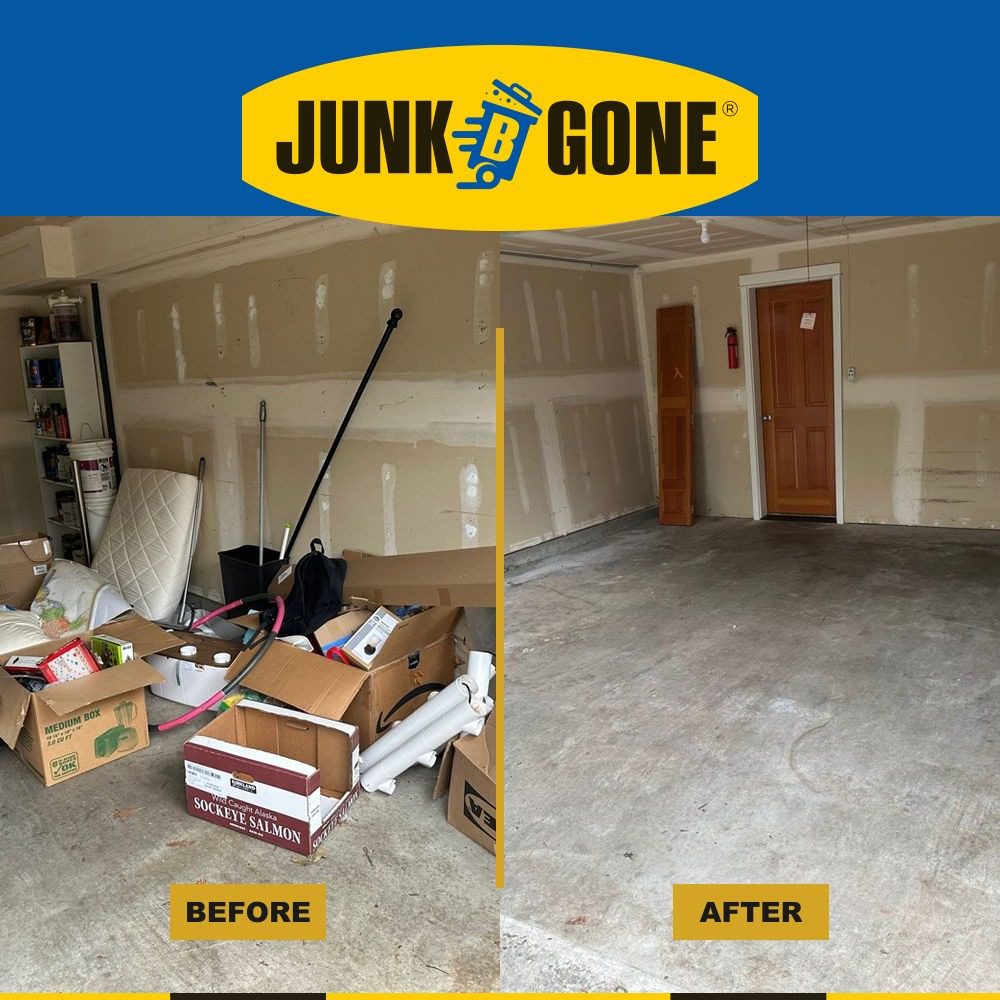
A Seattle homeowner called us with a backyard that looked more like a demolition site than a yard. Framing offshoots, OSB sheets, busted pallets, and concrete chunks were piled floor to ceiling against the foundation walls. This wasn’t a small cleanup — it was a full construction debris removal job in Seattle, and it needed a crew that shows up with the right trucks and gets it done in one pass.

What We Walked Into
This backyard sat behind a home mid-build, boxed in by concrete foundation walls on two sides. The framing crew had moved on, but the leftovers hadn’t. We’re talking stacked OSB boards, long pieces of scrap lumber crossed every which way, splintered wooden pallets, loose hardware, insulation scraps, and torn plastic wrap tangled through the whole pile. Concrete blocks were mixed in near the base, and construction paper and packaging trash filled the gaps between everything. It was the kind of pile that looks bigger the longer you stare at it — floor-to-ceiling debris packed tight against the walls with barely a path to walk through.
How We Handled It
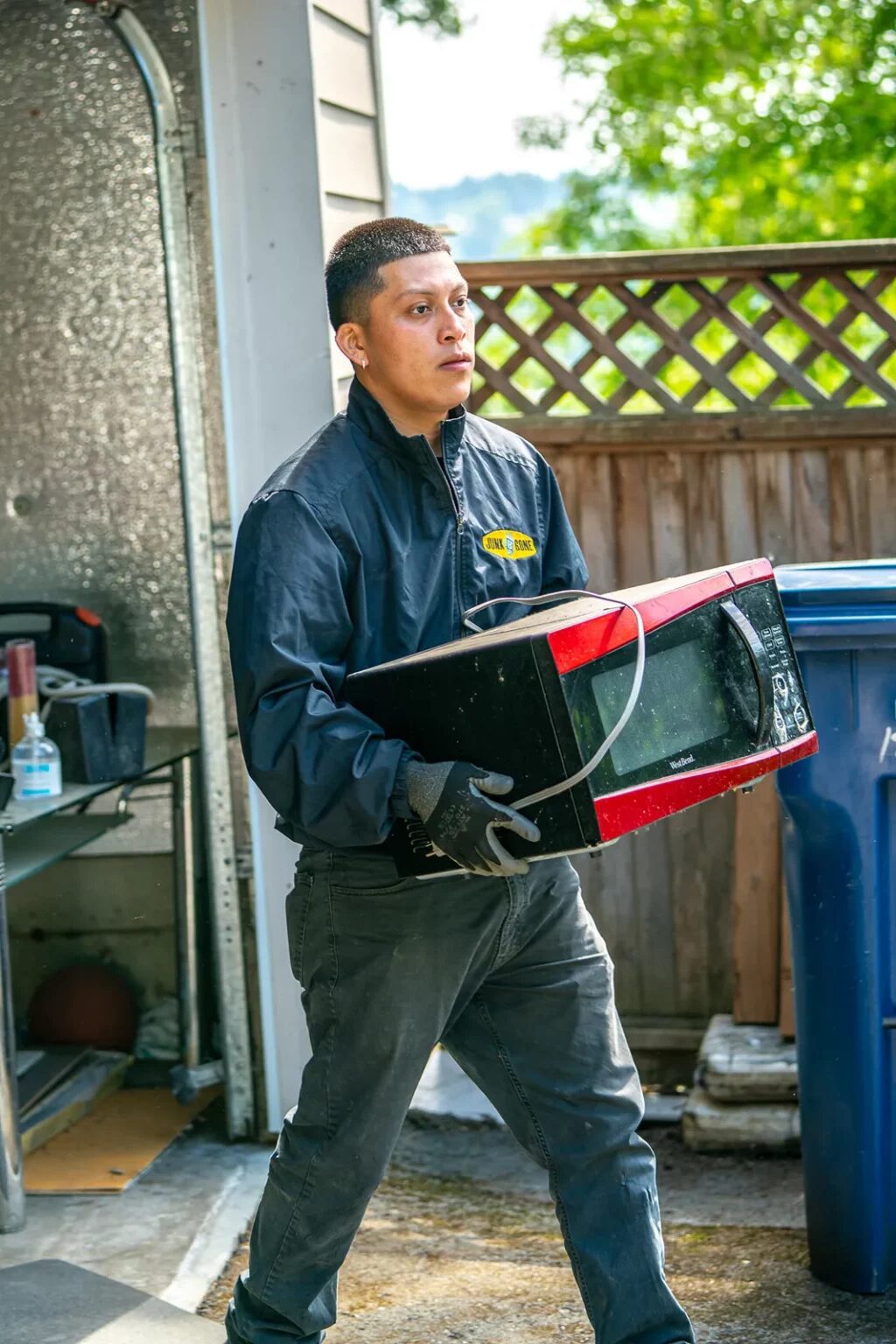
We sent a crew with our big trucks straight to the backyard access point. First move was sorting — lumber and OSB into one load, concrete and masonry debris into another, since heavy material like that gets hauled and disposed of differently than wood scrap. Our guys worked the pile from the top down, pulling loose boards first, then breaking down the pallets and stacking lumber for efficient loading. Sharp edges, exposed nails, and loose staples meant we moved carefully but quickly. Two hours later, the yard that had been buried was cleaned up and ready to go — no scrap wood, no pallets, no leftover concrete chunks. You point, we haul, and we don’t leave a mess behind for the next contractor to deal with.
Need your space back? Call (206) 722-4285 or get your free estimate.
Tips for Clearing Construction Debris After a Build
- Sort as you go. Keep untreated lumber separate from painted or treated wood — it changes how the material gets disposed of.
- Watch for hardware. Nails, screws, and staples hide in scrap piles like this one. Boots and gloves aren’t optional.
- Don’t stack against the foundation. Debris left against concrete walls can trap moisture and invite pests over time.
- Break down pallets early. Flattened pallets take up a fraction of the space of intact ones and load faster.
- Call before it piles up. A quick pickup after each build phase beats one massive haul at the end.
Since 1989, Junk B Gone has hauled everything from single-room cleanouts to full construction debris piles across Seattle. Big trucks, low prices, and a crew that treats your property like it’s their own. We sort what can be recycled and route it through Second Spark when possible, so less ends up in the landfill.
Frequently Asked Questions
Ready to Reclaim Your Space?
One call. One fair price. We handle everything.